
Jewellers went on strike for three days from March 2.
The GST rate for the sector has not yet been finalised by the government.

Wants to help govt fight the widening current account deficit.

Some jewellers kept their shops shut in Mumbai as well.
The strike entered the 15th day on Wednesday.

The move came against the backdrop of Turkiye backing Pakistan and its condemnation of India's strikes on terror camps in the neighbouring country and Pakistan-occupied Kashmir under Operation Sindoor.
The retailers are also mulling putting a stop to selling of gold coins and gold bars to curtail investments made in gold, according to an official of trade body All India Gems and Jewellery Trade Federation.
The recent restrictions on gold imports will encourage smuggling and grey markets activities in the country.
Most of the jewellers who had reopened their showrooms in confusion on Monday, kept shutters down today at Mumbai's Zaveri Bazar and several other places, demanding rollback of the proposal.
The biggest bullion-importing bank in India plans to team up with jewellers for the first time to offer a gold deposit scheme, hoping ease of access and attractive interest rates will tempt people to part with their jewellery and relieve tight supplies.

The government has not given any concrete assurance on the rollback of excise duty.

Over 300 associations, that consists of over 3 lakh manufacturers, retailers, wholesalers and artisans among others, are participating the nationwide stir.

The 80:20 rule mandates importers to channel at least 20% of the import quantity for jewellery exports.

Owing to uncertainties on higher inflation and muted growth in the United States (US), coupled with concerns around America's rising debt and tariffs imposed by President Donald Trump, the world's largest economy has become the epicentre of an unabated record rally in prices of precious metals.

The new Companies Act that came in to force qualified the money mobilised by jewellery companies as deposits and as a result they had to discontinue such schemes.

Jewellers see flat gold sales this Dhanteras

Precious ornaments are estimated to become 3% costlier under GST

The panel will look into issues related to compliance procedure.

India's biggest jewellers' association has asked members to stop selling gold bars and coins.

Jewellers on Monday decided to continue their pan-India strike for an indefinite period against the Budget proposal.
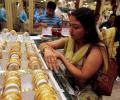
Jewellers across the country will go on a 'token strike' on August 23 against the "arbitrary implementation" of mandatory hallmarking of gold jewellery, All India Gem and Jewellery Domestic Council (GJC) said on Friday. The strike will be supported by 350 associations and federations from all four zones of the entire gems and jewellery industry, the GJC claimed. Mandatory gold hallmarking has come into force from June 16 in a phased manner. The government has identified 256 districts from 28 states and union territories for the phase-1 implementation.
They would intensify the protest if their concerns are not addressed in the Budget.
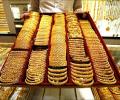
A worker earns Rs 10,000-20,000 but in the past month earnings had dwindled to Rs 5,000-7,000.

Many offer personalised ornaments with 3D printed images and engraved names to lure customers in a scenario of high gold prices.

Gold, a safe-haven bet, is likely to continue its record-smashing journey in the New Year, rising to Rs 85,000 per 10 grams and even Rs 90,000 level in domestic markets if geopolitical tensions and global economic uncertainties continue.

A sharp decline in sales and prospects of a grim future have resulted in a fall in jewellery stocks.

The government has asked jewellers to provide information on purchases of gold bars or jewellery worth more than Rs 500,000 by the end of this month, a move seen keeping a check on big transactions amid rising smuggling.

Jewellers sold huge quantities of precious ornaments at a premium of up to 50%.

Spot gold fell as far as $1,142.10 an ounce on Thursday, its lowest since November 2014.
Nearly two-thirds of India's gold demand comes from rural areas where jewellery is a traditional store of wealth for millions who have no access to the formal banking system.

Govt has so far refused to bring down the import duty to 2% from the current 10%.

Jewelers also want import duty on gold to be reduced from the current 10 per cent to at least 5 per cent.

Orders for the festive season abroad begin from next month.

Regaining the lost sheen, sales of gold jewellery and coins are set to touch pre-COVID levels in volume terms on the auspicious Dhanteras as easing pandemic concerns and pent up demand saw consumers flocking to stores to buy the precious metal. Increased footfall at stores and brisk sales online as well as relatively softer gold prices compared to record Rs 57,000 per 10 grams level in August spurred increased buying, especially light weight offerings, on Tuesday. Dhanteras is considered to be auspicious for buying precious metals and other valuable items.
By tying gold imports directly to export volumes, India is effectively trying to cap how much bullion can be brought into the country, tightening supplies and driving up local prices.
Gold bullion purchases across Asia slowed this week as a long rally in prices discouraged buyers.

Consumer sentiment seen better than last year's
In China, premiums fell to about $1.50 an ounce on Friday from $2-$3 an ounce.

Non-resident Indians are bringing gold into the country by taking advantage of rules that allow each individual to carry 1 kg of the metal, helping traders cope with restrictions on imports during the peak wedding season.

The jewellery industry has welcomed the government's decision to ban old Rs 500 and Rs 1,000 notes, saying gold demand will rise as people will have more faith in the precious metal than the currency notes. But the unorganised builders and secondary (resale) property market would be adversely impacted.
